Spain's 1-0 extra-time win in the 2026 final was not just a sporting victory; it felt like a long-overdue correction. Argentina reached the final as defending champions with a relatively soft landing, a knack for late drama, and officiating that consistently tilted their way. They played like a team that knew the whistle would often protect them — physical, time-wasting, spoiling, bordering on thuggish at times — and for most of the tournament, it did. The "dirtiest SOBs" label fits. They got away with it until the final moments, when Enzo Fernández's reckless red card (second yellow on Pau Cubarsi) finally arrived too late to change the game's flow. Spain deserved the win; they dominated, created chances, and broke through when it mattered. Argentina offered almost nothing offensively for 90+ minutes (zero shots on target in regulation) and relied on resilience, cynicism, and friendly decisions.
The draw and path: Privileged from the start
Argentina landed in Group J with Algeria, Austria, and Jordan — a gift for defending champions. They cruised through with minimal resistance. Critics (and there were many) pointed to rigging claims because the bracket seemed to reward them with a smoother road compared to other heavyweights. Whether it was deliberate "protection" for Messi and Co. or just lucky seeding, the perception was awful considering they were drawn in Group I, but somehow found themselves in Group J. They then navigated knockouts with comebacks that often required help. VAR: "VARgentina" is not a conspiracy theory — the numbers back it up and data supports a shocking imbalance. Argentina racked up multiple favorable VAR interventions (reports cite 9-0 or similar net positive through key stages) with zero decisions against them in reviewed incidents across their run. No other team has 100% VAR decision go against their opponents, but Vargentina does.Other teams suffered the opposite. This isn't normal variance — it's an outlier that screams inconsistency at best, favoritism at worst. Egypt's round-of-16 match is Exhibit A: Argentina trailed 2-0, Egypt had a goal (Mostafa Ziko) disallowed by VAR for an earlier alleged foul on an Argentine player, and the holders stormed back for a 3-2 win. Egypt's camp called it outright cheating and "planned occurence."
Croatia's heartbreak (vs. Portugal in the round of 32) highlights how the new connected ball tech can feel arbitrary or selectively applied in the broader tournament narrative. Their stoppage-time equalizer was chalked off because the sensor in the Adidas Trionda ball detected a microscopic touch — possibly just hair — by Igor Matanovic, putting a teammate offside. Replays showed nothing meaningful; it was a (planned) tech-overreach that ended their campaign.
While not directly Argentina's match, it fed the sense that VAR/connected ball was inconsistently merciless or merciful depending on the team. Argentina seemed to land on the merciful side far too often.
Refereeing and on-pitch behavior: Leniency that enabled the dirt
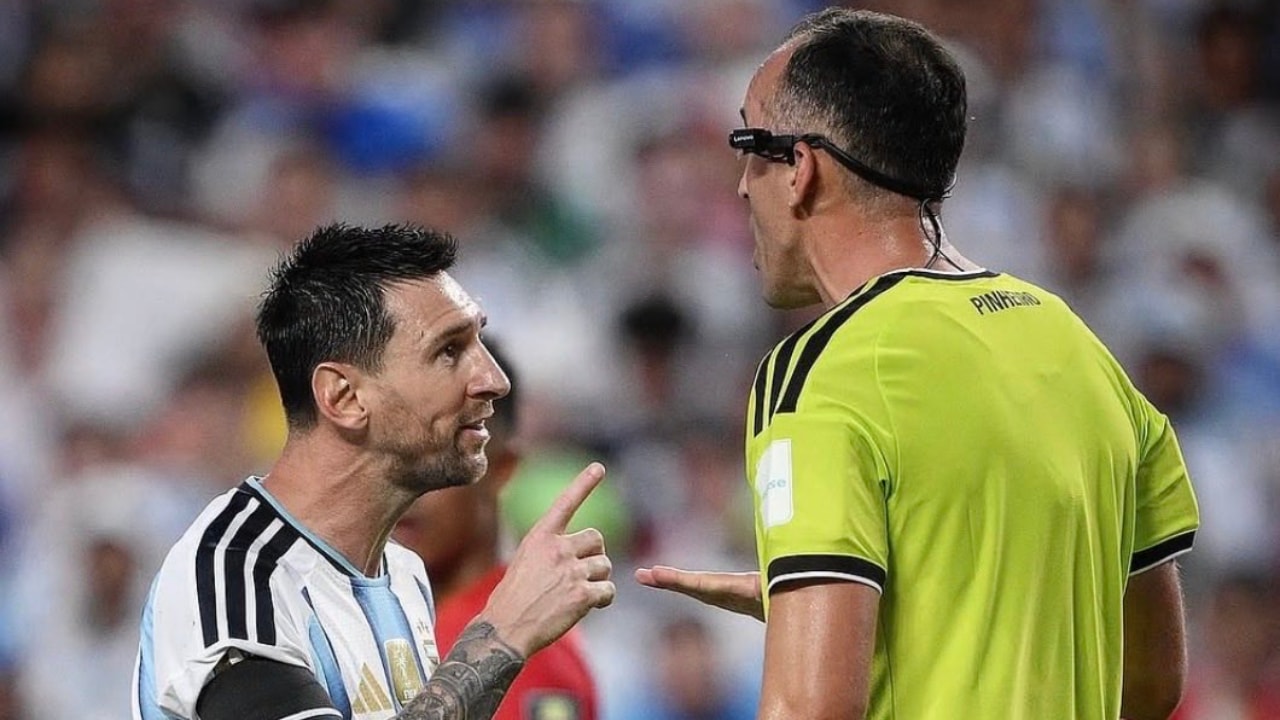
Argentina's style was combative combative, thuggish, beyond unsporting — fouls, simulations, pressure on refs, and spoiling. Refs swallowed the whistle for long stretches. The final crystallized it: Fernández's red came in stoppage time after a blatant challenge, and even then Argentina had a Spain goal (Nico Williams) disallowed on a soft call in extra time that kept them alive longer. Beyond ridiculous! Post-match brawl (Paredes grabbing throats, Molina, assistant coach punching Dani Olmo in the face) led to a FIFA probe — classic sore-loser entitlement after riding the wave.Messi being the absolute bastard that he is, cheated again, trying to pressure the ref into giving a red card to Cucurella for covering his mouth. Shortly after the World Cup in a podcast interview Cucurella explained the incident saying that he was telling Messi that Cubasi was injured on his mouth, which then Messi took and twisted it by trying to get him red carded. "I have zero respect for him." said Cucurella.
🚨🥊 Full scenes after final whistle.@MickyJnr__ 🎥 pic.twitter.com/ZXCvAFkHwy
— Fabrizio Romano (@FabrizioRomano) July 20, 2026
They weren't the only physical team, but the tolerance level for them was sky-high. Algeria protested early incidents (unpunished Messi challenge), Egypt raged, and social media/petitions exploded with "rigged" accusations. FIFA's response? Usually silent until the brawl forced their hand.
Brutal bottom line on FIFA favoritism
Yes, Argentina were heavily favored in a "big big way" — statistically via VAR, optically via draw and referee patience, and culturally via the Messi aura and Infantino-era star protection. It wasn't subtle. "VARgentina" became a meme for a reason. Whether it's outright corruption, unconscious bias toward big names/nations, incompetence in VAR application, or just tournament chaos amplified by emotion, the result was the same: one team got the benefit of nearly every doubt. It cheapened the competition and made neutral fans root against them.That said, no smoking-gun proof of a grand FIFA script to crown them again (they lost, after all).Perception of rigging often thrives where decisions cluster one way — and here they did.
Argentina still had to score the goals and show fight in comebacks, but they didn't do it clean or dominant.
Would they have gotten past the 1/8 final if it wasn't for the multiple VAR decision that denied goals to other teams? They were the beneficiaries of a system that looked broken in their favor.
Spain exposed the limits. They played better football, stayed composed, and won despite the obstacles. Good. Football needed that. The tournament's controversies — from hair-sensor offsides to one-sided VAR luck — leave a sour taste and fuel valid calls for reform. Argentina's privileged run ended in frustration and fights. Deservedly so. If FIFA wants credibility, they need to address why one team got the royal treatment for so long. Brutal truth: it looked rigged often, even if it ultimately failed.